There is no garment more wholly endemic to the 18th century than the English gown. Everything else in an 18th-century Englishwoman’s cedar chest could be found before 1700 and after 1799 – jackets, caps, petticoats, body linens – but the English gown is inherently of its time and place. Its ubiquity in every socioeconomic stratum blinds us, or at least me, to how unusual its construction really is and how radical a departure from Western European dress tradition it represented. In this post, I want to make strange the familiar and look at the English gown with an anthropologist’s eye.
the princess and the seam
I am speaking here specifically of Northwestern European dress ways. The words “fashion”, “dress”, “clothing”, and “traditions” will hereby be used specifically in reference to this geographic context.
I believe everything that distinguishes capital-M Modern clothing is owed most fundamentally to the development of the waist seam.
Throughout the high medieval period, women’s clothing was cut in what we now call a “princess line”: long panels from shoulder to ankle, joined at the sides. These garments could be loose enough to slip on over the head, or they could be tailored enough to require closure with laces or buttons. They could be belted or otherwise visually distinguished at the waist, but, crucially, there was no actual join at this site.
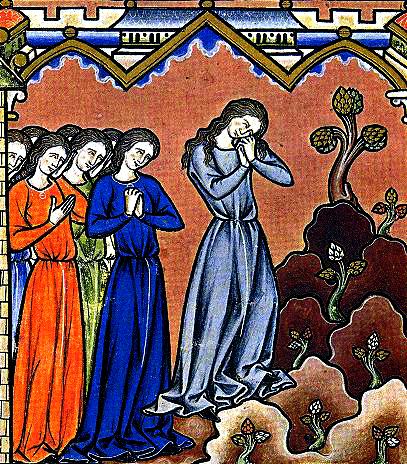
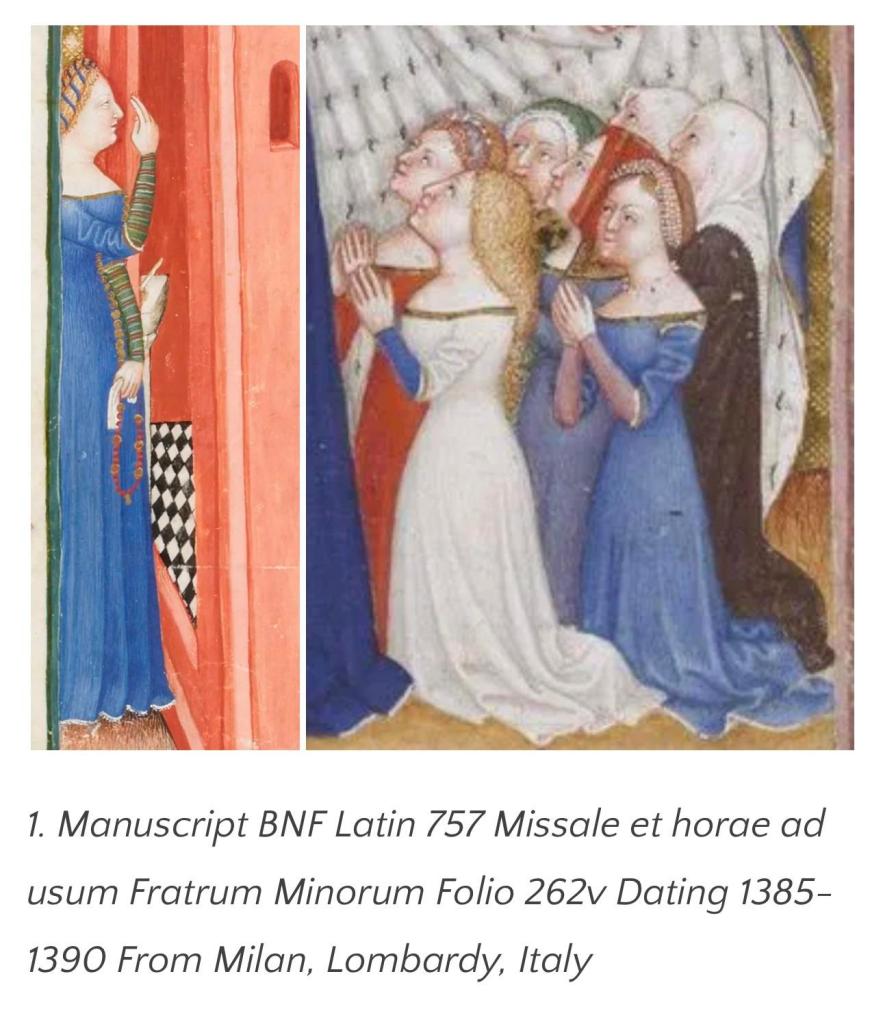
Bulk could be added only with additional panels or gores. Though pleats sometimes extended from the shoulder (mostly on men’s clothing), they did not specifically emphasize the waist or the hip. Consequently, “separates” did not yet exist for women: bisecting cloth into a distinct “top” and “skirt” ran counter to the very principles of high medieval tailoring.
In the 15th century, however, the waisted kirtle emerged. The gown’s basic silhouette stayed the same at first, merely adding a seam at the waist to join the top and bottom of the garment. The overall outline stayed relatively slim through the waist; the skirt’s widest point was still the sweeping hem. As the century progressed, though, bulk was gradually pleated into the waistband, creating the bell shape that would reach its peak with the Elizabethan farthingale.
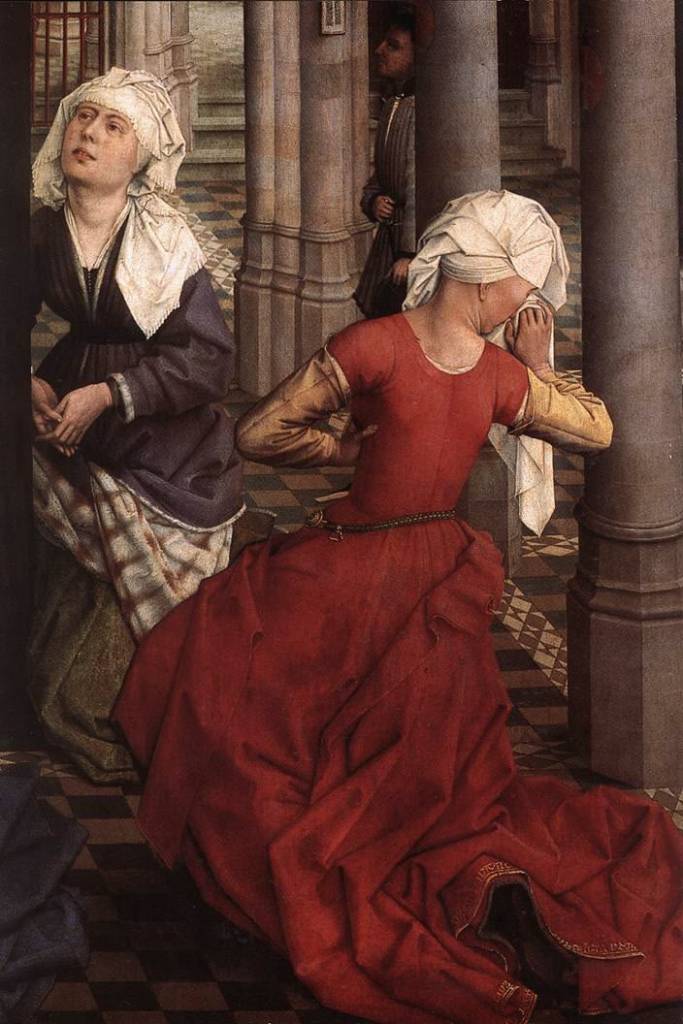
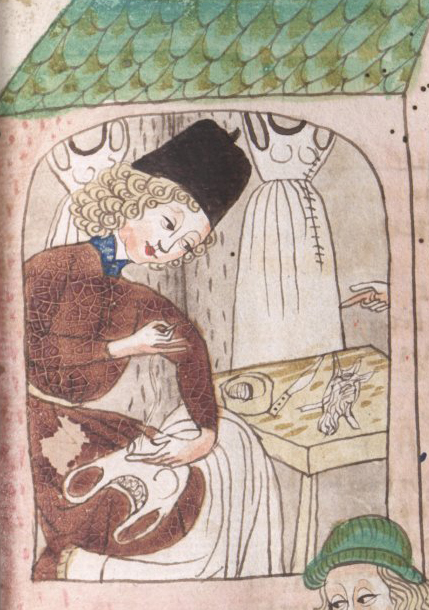
The concept of a separate bodice and skirt for women had entered the Overton window. Though they were still joined in a single garment during the 15th century, the techniques for making and shaping each part began to diverge until they became, essentially, two distinct pieces of clothing. Here we see the primordial form of more or less every garment we recognize today.
bodies for our bodies
For the next two centuries, the top/bottom distinction governed almost every part of a woman’s wardrobe. Full-length gowns still existed, but they were cut in parts and joined at the waist1. Separates also entered the picture: for the first time since maybe the Bronze Age2, a woman could choose one garment for her upper body and a second, contrasting garment for her lower.
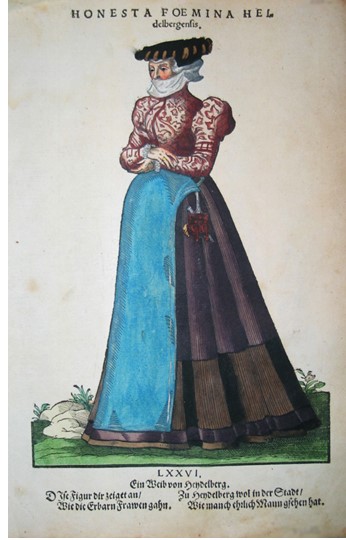
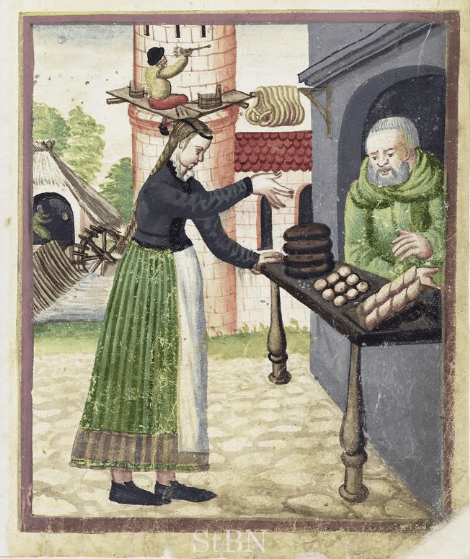
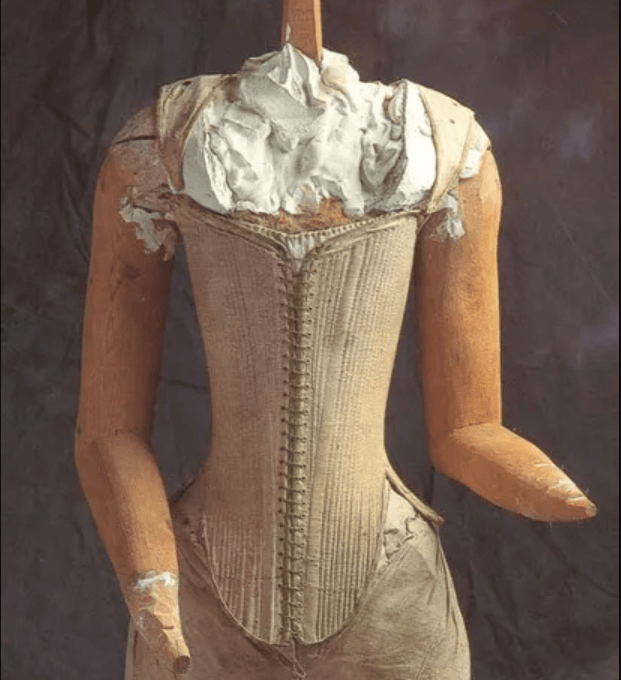
The distinction also affected undergarments. As upper and lower segments of undergowns diverged in their construction, upper halves became tighter, more tailored, and altogether more supportive. By the end of the century, they had shaken off the skirt altogether3. Enter “pairs of bodies”: the prototype of what we 18th-century broads call stays and what seemingly everyone else calls a corset.
the mantua and its consequences
There was a lot going on, sartorially, in the 17th century. Way more than I can do justice to in a post that is supposed to be about an 18th-century garment. Just know that they call it a transitional period for a reason, and like all such periods, it had some spectacularly awkward moments. Much awaits interested parties at the FIT NYC website.
Anyway, the most relevant element here is the birth of the mantua: the godmother of – wait for it – the English gown.
The mantua, from the French manteau (robe)4, was the female equivalent of a banyan and the 17th-century equivalent of a dressing gown. It was considered “undress”, which at the time meant not nakedness but informality. Such garments having originated in the courts of Europe, though, meant that even informality had a lush coziness to it. Think intimate parties in dressing rooms, not chugging coffee half asleep.
Crucially, both the mantua and the banyan were products of England’s dominance in global trade. Their shape was influenced by Japanese kimono, and they were cut in long panels to show off unbroken lengths of intricate Indian-inspired bizarre silk brocade. These two factors combined to create the first truly non-waist-seamed garment that fashionable women had worn for 200 years.
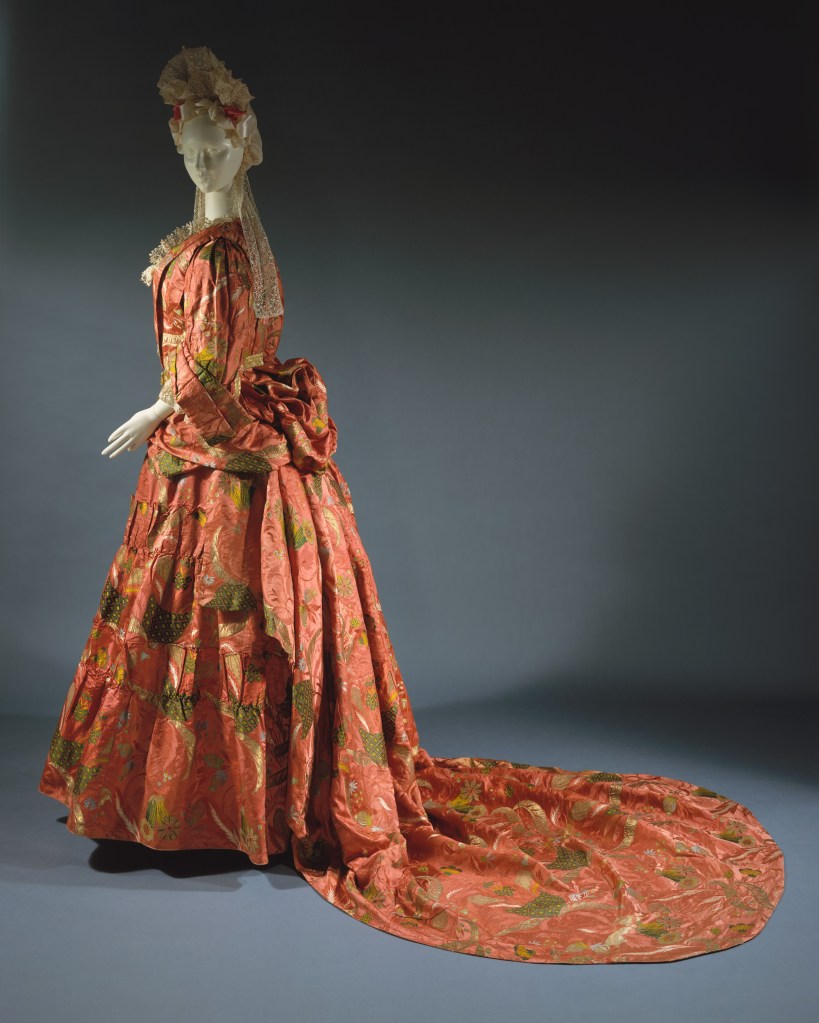
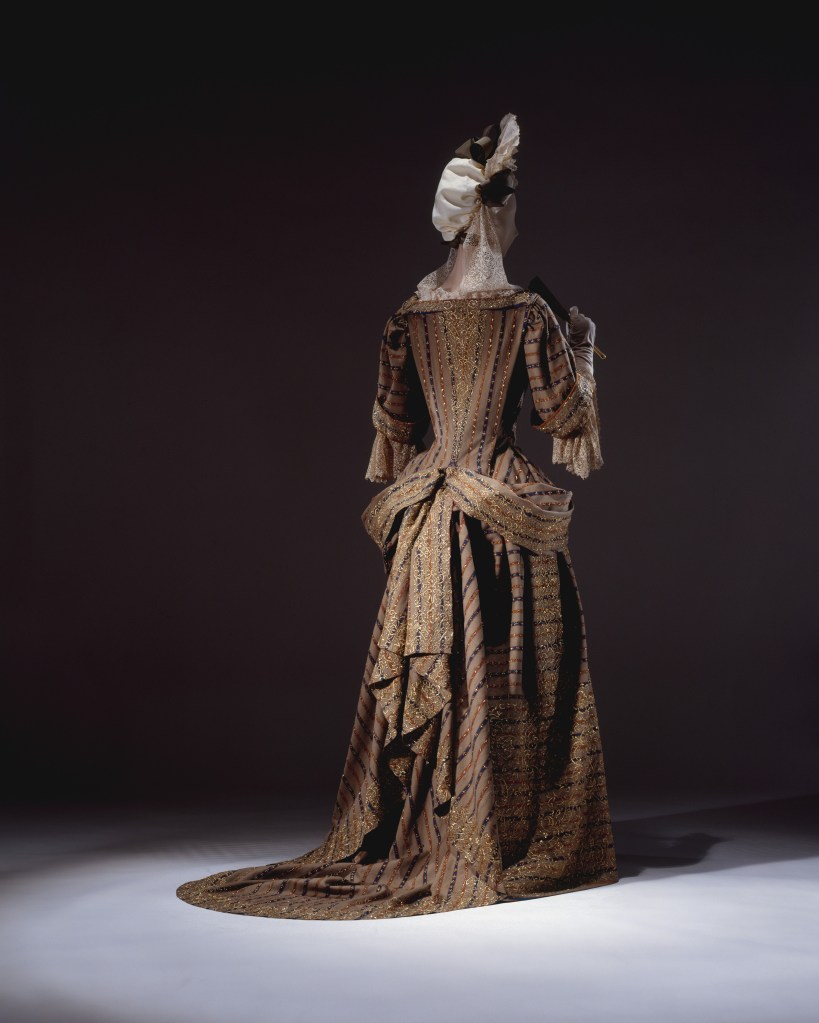
The mantua was thought to display silk designs to their best advantage, as they were draped rather than cut … The mantua was a coatlike construction, with sleeves cut in one piece with the back and front. It was pleated at the shoulders and fell to the waist, where it was held in place by a sash. From there it was folded back into a bustle shape and worn over a matching petticoat.
The waist-seam revolution, however, was not to be undone. Integral to the mantua experience was wearing it over stays and petticoats. The contrast of something loose and dramatic over tailored undergarments was intoxicating. I cannot stress how unusual this aesthetic development was within its social context, but I also find it fascinating how this basic outfit form – long dress over bust-supporting undergarment – prefigured the next 200 years of women’s fashion, from corsets up through brassieres. A mutation so powerful that it changed Western fashion’s entire genetic blueprint.
It is this mutant that gives birth to the star of our show, the English gown.
from drawing room to laundry room
Like all inventions, the mantua emerged not from the primordial goop but from a particular social context – a very wealthy one at that. I find it fascinating, then, that its descendant became so thoroughly globalized. A wildly successful gene, to belabor our metaphor. Throughout the 18th century, the garment’s keystone feature evolved from its materials to its distinctive construction methods, making it accessible to women of all socioeconomic classes. By the 1770s, working-class and even enslaved women were wearing gowns of the same fundamental structure as the great queens of Europe – though certainly of poorer stuff than Italian figured silk.
What distinguishes the English gown, first and foremost, is its center back pleats. Done right, it reminds me of a spatchcocked turkey:
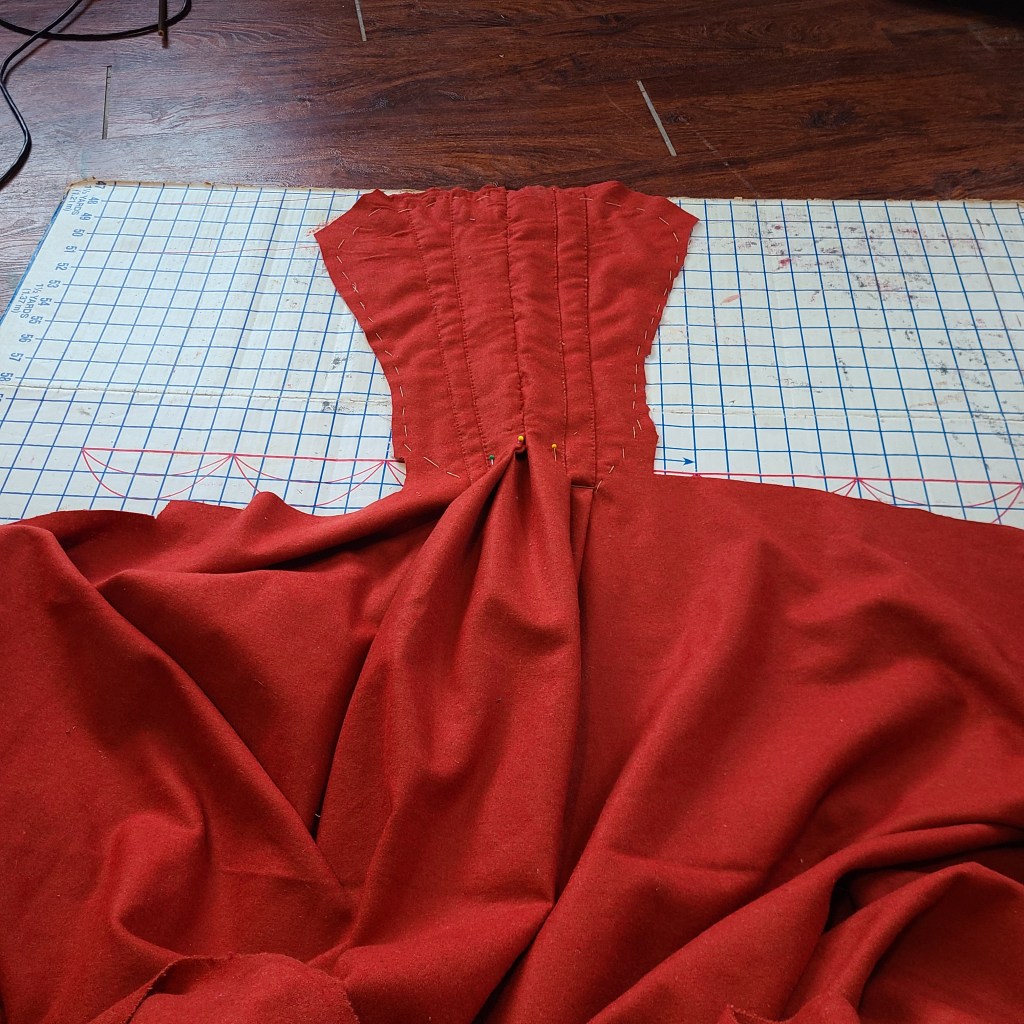
The English gown is the perfect intermediary between high medieval princess kirtles and stiff, starched early modernity. Thesis, antithesis, synthesis. The back of the gown uses the same amount of fabric as early mantuas, but pleated and stitched to a bodice lining rather than left to billow. The skirts are cut in one with the bodice back (like mantuas and princess gowns before them), but pleated to separately added side panels (like an early modern gown). The front laces together but does not meet: it is left open to be filled in with a matching (or contrasting) panel called a stomacher.
When I’m half-dressed, wearing an English gown sans stomacher over petticoat and stays, I can see the influence of three hundred years of fashion. I can see clothing as a technology: one that iterates, improves, and leaves fossils everywhere for those with eyes to see.
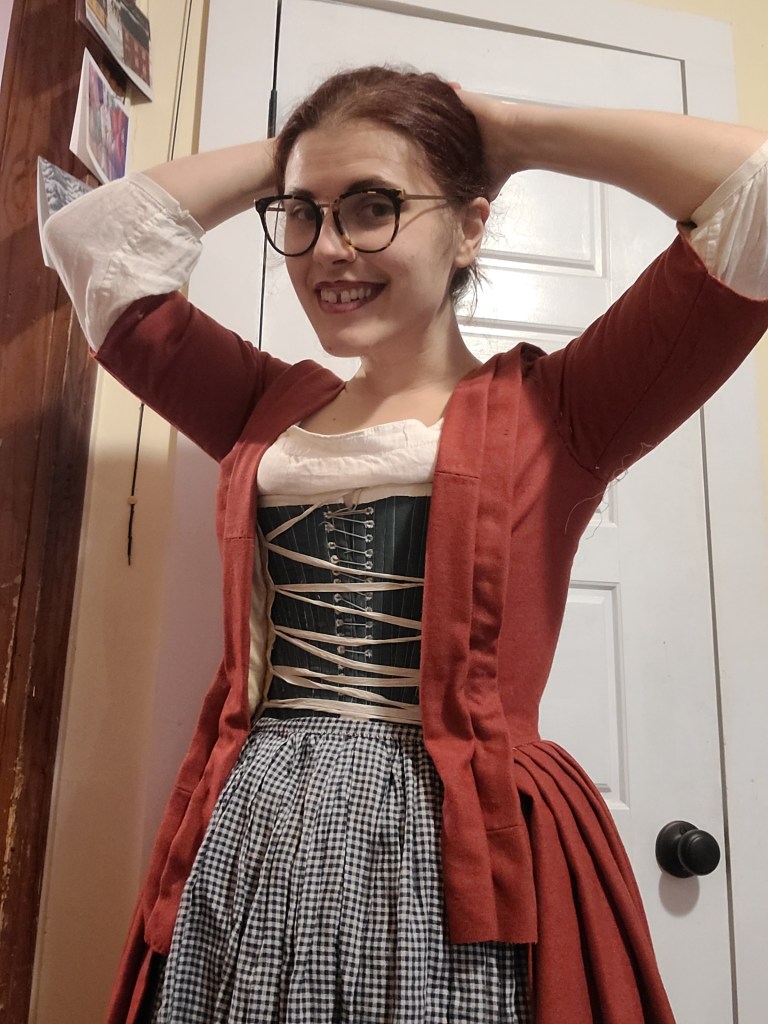
I have made eleven English gowns of varying quality. They kick my ass every time. No other garment is quite so exquisitely sensitive to subtle differences in fiber content or pleats twisted slightly off the grain. A seam ripper must always be close at hand in its making. And yet I’m already pondering the material for my twelfth. Such is the cycle of frustration and satisfaction. I can’t quit them, nor would I ever want to.
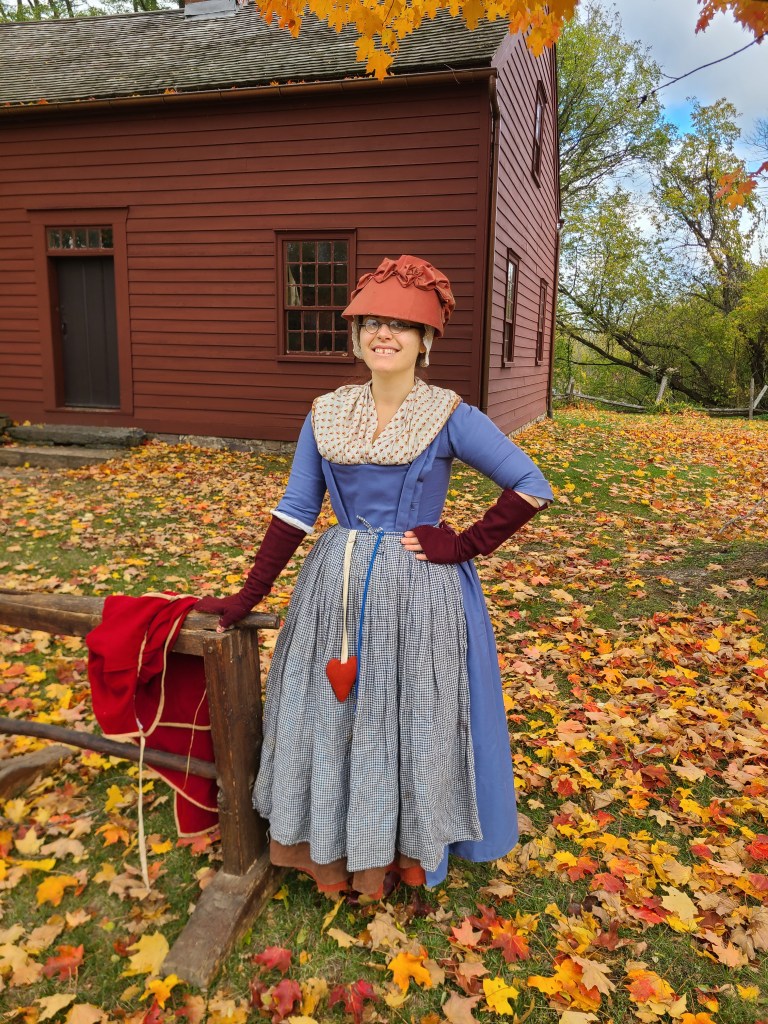
This post is already quite long, so it will be split into two parts. The second part will go into further detail about the English gown’s construction and my preferred methods. For now, I leave you with its (highly abridged) history and a photo of my latest iteration, debuted last month at our 10th annual Flaxtravaganza.
- Princess-line garments did still exist, but they were understood more as outerwear (rather like today). ↩︎
- Please don’t quote me on this. I am referring to Bronze Age grave findings, which indicate separate upper and lower garments for women, but I know neither whether this was widespread nor whether any of the many periods between the Bronze Age and the 14th century also saw a resurgence of separate skirts. ↩︎
- At least for noblewomen. Inventories indicate that gentry and below would continue to wear waist-seamed supportive kirtles for a good few decades. ↩︎
- Could also possibly refer to Mantua, Italy, a linchpin of the silk trade. ↩︎


Leave a Reply